
Changing How the Pros Analyze Bond Rates – Here’s the Scoop
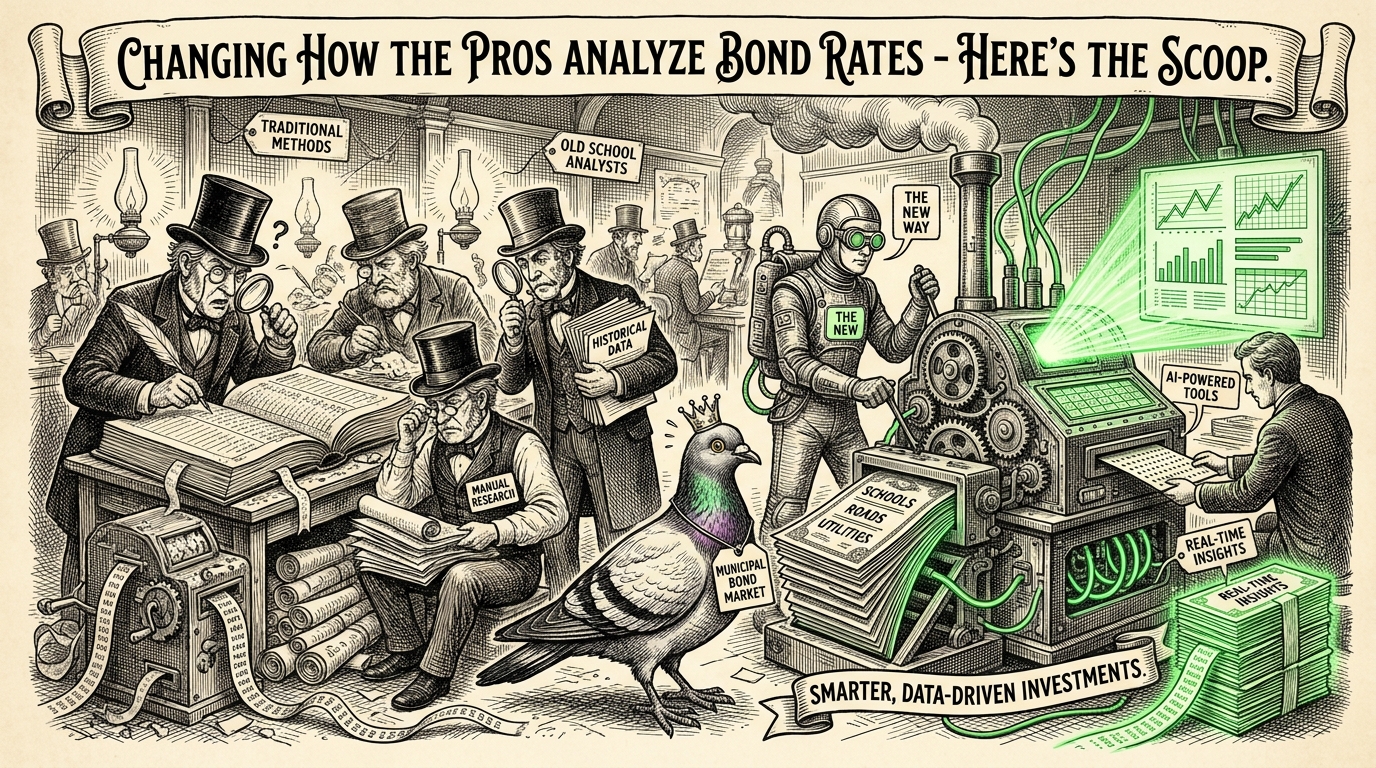
Municipal bond rates analysis plays a pivotal role in helping investors understand the potential risks and returns of bonds issued by local governments, cities, and other public entities. With the rise of new technologies, AI and the Municipal Bond Market have formed a powerful synergy that is changing the way we evaluate and understand bond rates. This article provides an in-depth look at how AI is reshaping the landscape of municipal bond rates analysis and what that means for smarter, data-driven investments.
Overview of Municipal Bonds and Why Bond Rate Analysis Matters
Municipal bonds are typically issued to finance public projects such as schools, roads, and utilities. Because these bonds are often backed by tax revenues or public funds, they are generally considered lower risk compared to corporate bonds. However, understanding the subtle nuances of municipal bond rates is essential for investors to make informed decisions about creditworthiness, yield potential, and market volatility.
How AI Is Changing Traditional Methods of Analyzing Bond Rates
Traditionally, analysts have relied on historical data, economic indicators, and manual research to gauge municipal bond rates. Today, AI-powered tools can sift through vast amounts of data in real time, predicting market movements and identifying price anomalies that human analysts might miss. Machine learning models, in particular, can help forecast municipal bond rate fluctuations with greater precision, ultimately allowing investors to optimize their portfolios and mitigate risk.
What Are Municipal Bond Rates?
Municipal bond rates are the interest rates that issuers pay to borrow money from investors. The rates directly affect the yield and overall profitability of the bond for the investor. Higher rates often indicate a higher yield but may also reflect increased risk.
Definition and Importance of Municipal Bond Rates
Municipal bond rates depend on multiple factors, such as the issuer’s creditworthiness, market demand, economic conditions, and prevailing interest rates. Rates not only impact how much income an investor can expect but also influence the bond’s price on the secondary market. For income-focused investors, understanding how these rates move is crucial for identifying attractive entry and exit points.
Factors Influencing Bond Rates
- Credit Quality: Bonds with lower credit ratings usually offer higher interest rates to compensate for increased default risk.
- Interest Rate Environment: When general interest rates rise, municipal bond rates often follow suit, affecting the attractiveness of existing bonds.
- Economic Indicators: Economic growth, inflation, and government fiscal policies can shift investor sentiment, influencing demand for municipal bonds.
- Supply and Demand: The availability of new bond issuances versus market appetite can cause fluctuations in bond rates.
Additional factors to consider:
- Length of Maturity: Generally, longer-term bonds offer higher interest rates to compensate for the increased risk over time.
- Tax Considerations: The tax-exempt status of many municipal bonds can make them more attractive to investors in high tax brackets, potentially affecting rates.
- State and Local Finances: The financial health of the issuing state or locality can significantly impact bond rates.
AI’s Role in Bond Rate Analysis
AI and the Municipal Bond Market form a powerful combination that can vastly improve the efficiency and accuracy of bond rate analysis.
AI in Real-Time Rate Monitoring and Predictions
AI can process real-time market data, including news reports, economic releases, and bond issuance updates, to provide up-to-the-minute analysis. By continuously monitoring fluctuations, AI-driven platforms can offer instant alerts on potential buying or selling opportunities.
Machine Learning Models for Rate Forecasting
Using historical data and advanced algorithms, machine learning models can detect patterns that might not be evident through standard statistical methods. These models learn from new data over time, refining their predictions of municipal bond rates. This continual improvement gives investors a critical edge:
- Reduced Human Error: Automating data gathering and analysis helps remove biases and mistakes.
- Timely Insights: Rapid data processing means investors can respond swiftly to market changes.
- Greater Accuracy: Machine learning algorithms can account for a multitude of variables, offering more nuanced forecasts than traditional methods.
For extra context, here are some additional points to consider:
- Predictive Modeling: For instance, AI can forecast market movements, interest rates, and credit risk with a higher degree of accuracy, allowing for better-informed investment decisions.
- Enhanced Data Analysis: AI can process and analyze vast amounts of data, identifying patterns, trends, and anomalies that provide deeper insights for investors and analysts.
- Risk Assessment: AI models can analyze data to predict economic trends, demographic shifts, and environmental risks, aiding issuers in assessing bond viability.
- Liquidity Modeling: AI can analyze trading volume, bid-ask spreads, and other liquidity-related data to forecast how market conditions might impact a bond’s price.
- Portfolio Optimization: AI can be used to optimize bond portfolios by considering factors such as risk, return, and liquidity constraints.
Case Studies: AI in Action
Example of AI Improving Municipal Bond Rate Analysis
Firms are increasingly using AI to process real-time data, including economic indicators and market sentiment, to identify actionable opportunities. Consider a large asset management firm specializing in municipal bonds. By implementing AI-driven analytics, the firm was able to:
- Process thousands of daily news articles to identify potential market shifts.
- Leverage machine learning models to project rate changes based on economic indicators.
- Provide its portfolio managers with real-time dashboards that flagged underpriced or overpriced bonds.
As a result, the firm saw improved returns and reduced exposure to defaults, illustrating how AI in municipal bonds can guide smarter investment decisions. AI platforms like SOLVE Px use predictive pricing to analyze vast datasets, offering insights into underpriced or overpriced bonds.
How Investors Can Leverage AI-Powered Tools
- Portfolio Optimization: AI tools can balance risk and return by recommending the optimal mix of bonds.
- Customized Alerts: Investors can set personalized thresholds for rate changes, receiving automated signals when conditions meet their criteria.
- Credit Risk Assessment: Beyond rate analysis, AI can also gauge the creditworthiness of issuers, offering a more holistic investment perspective.
AI platforms like SOLVE Px use predictive pricing to analyze vast datasets, offering insights into underpriced or overpriced bonds. By combining real-time data, advanced algorithms, and intuitive features, MuniBonds.ai equips investors with the tools and insights to enhance their decision-making and identify potential investment risks and opportunities in real time by leveraging real-time data, advanced algorithms, and intuitive features.
AI-powered platforms, such as SOLVE Px, leverage predictive pricing and vast datasets to offer valuable insights into potentially underpriced or overpriced bonds. Others, such as MuniBonds.ai, offer features such as an AI Market Sentiment in order to provide a current and valuable credit analysis, unlike credit ratings from traditional agencies with sometimes tend to offer stale and outdated analysis. These platforms combine real-time data, advanced algorithms, and intuitive features. As a result, they equip investors with tools to enhance decision-making. Investors can also identify potential risks and opportunities in real time.
Key Takeaways
Municipal Bond Rates Analysis is vital for gauging potential returns and risks.
- AI-driven platforms enhance traditional methods by providing real-time monitoring, predictive modeling, and improved accuracy in forecasting.
- Case studies show that integrating AI and the Municipal Bond Market can lead to better-informed decisions, helping investors optimize portfolios and capitalize on emerging opportunities.
Future of AI in Bond Rate Analysis
As technology continues to advance, AI in municipal bonds will only grow in prominence. We can expect more sophisticated algorithms capable of analyzing not just local and global economic data but also environmental, social, and governance (ESG) factors. This holistic approach will empower investors to make decisions that balance financial returns with broader social impact, ushering in a new era of municipal bond investing driven by data and innovation.